
Quick answer: Hotel food photography has to sell more than a dish. It sells the experience of eating at your property: the plate, the room it’s served in, the view, the light and the people who make and serve it. Plan a shot list that covers signature dishes, chefs at work, dining spaces, breakfast and rituals, and dining with a view. Work with a food stylist and the executive chef, shoot in small batches while the food is at its best, and schedule the day around service. Then deliver crops for your website, OTA listings, menus, ads and Reels. Here’s how we approach it for hotels and resorts.

Why Hotel Food Photography Is Different
A packaged-food brand needs images that sell a product. A restaurant needs images that fill tables. A hotel or resort needs both, and one more thing: its food images help sell rooms. For many guests, a beautiful breakfast on a verandah, a chef’s tasting menu or a candle-lit dinner by the pool is part of the reason they book.
Hotel food photography also comes with its own practical challenges:
- Many outlets, one brand. An all-day diner, a speciality restaurant, a bar, in-villa dining and banquets each have a different mood, but they need to feel like the same property.
- A working kitchen. The kitchen is still feeding guests while you shoot, so every plate has to fit around service.
- Several decision-makers. The F&B manager, executive chef, marketing team and sometimes a brand team all have a say in what’s photographed and how.
- Honesty matters. Guests will order these dishes. If the plate on Instagram looks nothing like the plate on the table, trust suffers.
A Hotel Food Photography Shot List
This is a starting point we adapt for each property. It covers the images most hotels and resorts actually use.
1. Signature dishes
The hero plates from each outlet, photographed so the dish is clearly the star. Plated, layered dishes usually look best at about a 45-degree angle, close to the diner’s point of view. Flat dishes, platters and spreads often work better from directly above. Shoot each hero dish both ways if you can, and leave room in some frames for menu text or a logo.
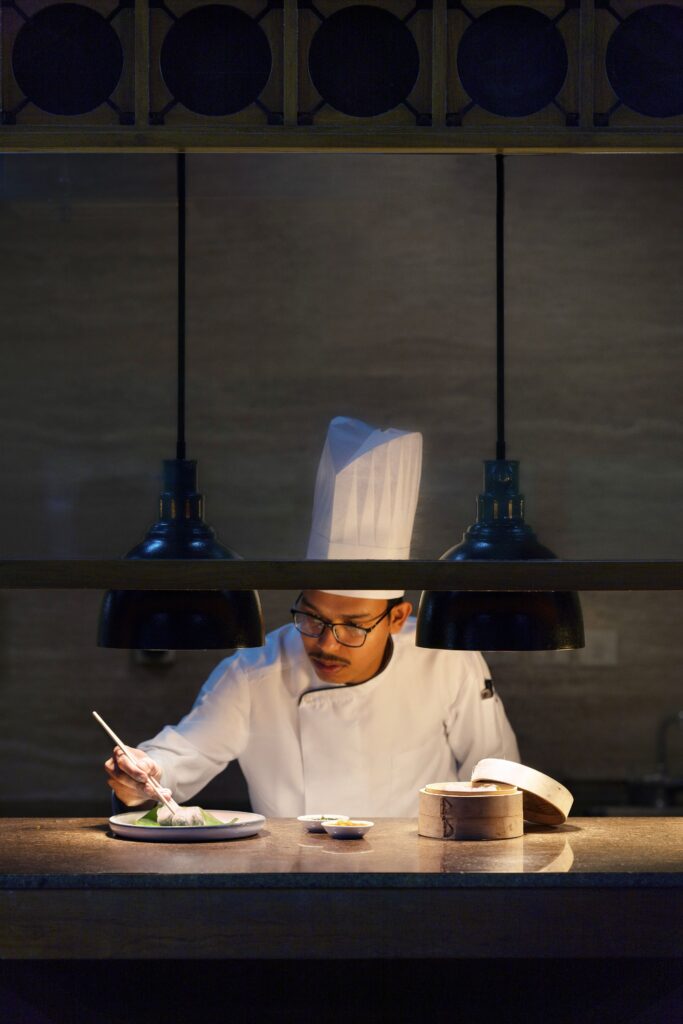
2. Chefs and kitchen moments
Hands plating a dish, a chef finishing a sauce, steam rising off a tawa. These frames show craft and care in a way a finished plate can’t. On our hospitality shoots, from the chef plating under warm kitchen lights at Taj Chia Kutir to the chef plating a gourmet dish at Taj Bengal, these images are often the ones that feel most alive.
3. Dining spaces and table settings
The restaurant set for service, with linen, glassware and lighting just right, plus a few frames with staff setting the table. These images help guests picture the evening, and they double as venue images for celebrations and events.
4. Breakfast, tea and signature rituals
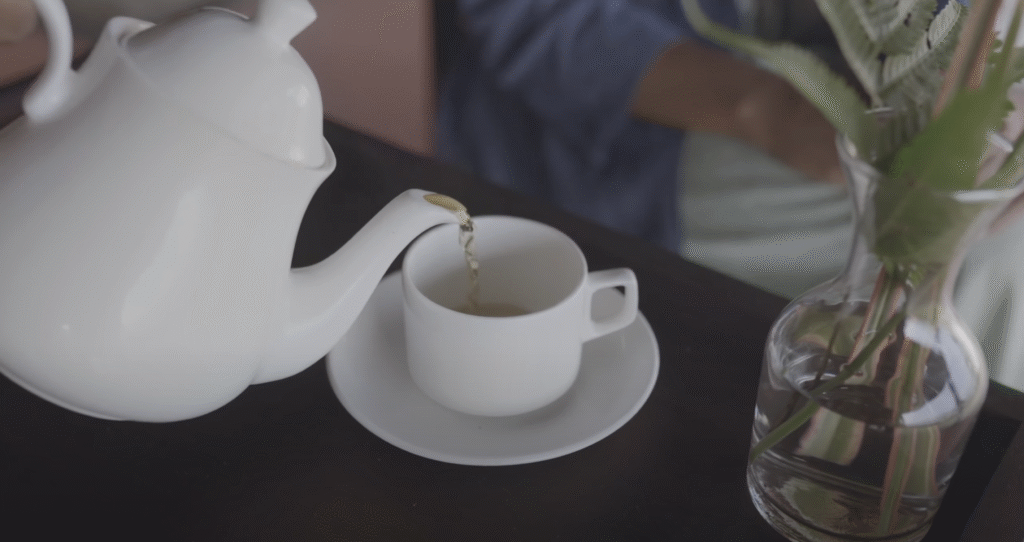
Breakfast is one of the most photographed and most shared moments of any stay. So are rituals that belong to the property. At Taj Chia Kutir, set in the Darjeeling tea estates, tea-tasting rituals were part of the story we captured. At Paradisa Plantation Resort, morning tea became one of the micro films. Find your property’s equivalent and give it its own set-up.
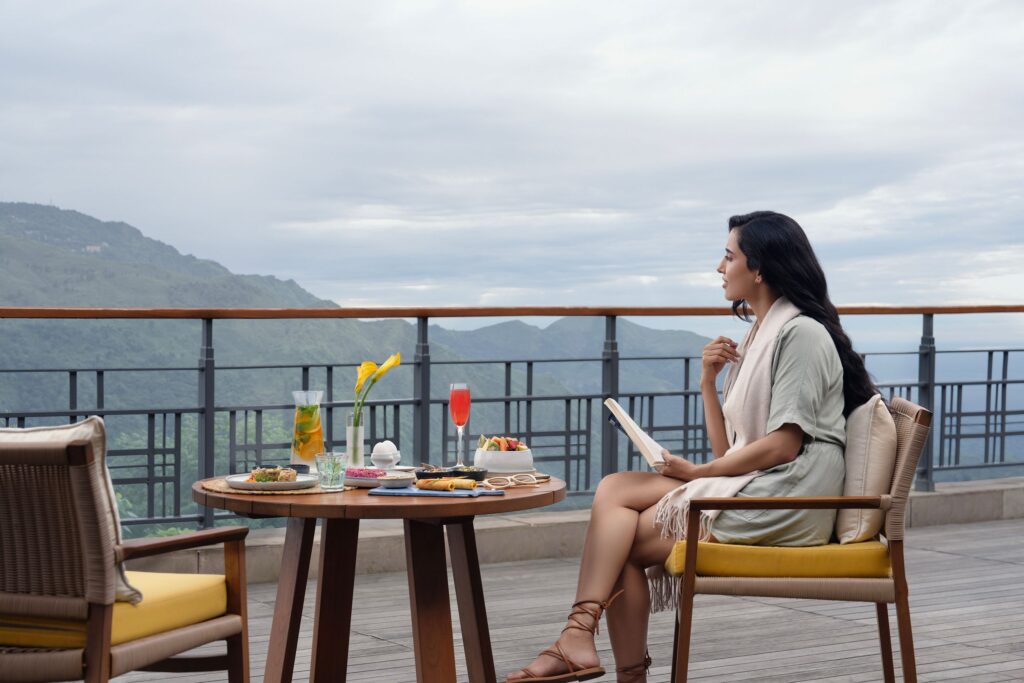
5. Dining with a view
A meal on a terrace overlooking the hills, breakfast on a balcony, dinner on the beach. These frames combine food, place and people, and they’re often the strongest images for your website and ads because they sell the whole stay at once.
6. Bar and beverages
Cocktails, mocktails, a fresh pour, the bar counter lit for the evening. Drinks photograph best with backlight, which makes liquids glow and shows condensation on the glass.
7. Motion
Short loops of a pour, steam, a sizzle or a garnish landing on the plate. Plan them alongside the stills, because the set, styling and light are already in place. On our food brand work for Wild Fish, the same production delivered retouched photographs, recipe films, cinemagraphs and stop-motion clips.
Food Styling for Hotel Shoots
A good food stylist is the single biggest upgrade you can make to a food shoot. On our Wild Fish and Double Horse productions, a dedicated food stylist was part of the crew. Their job is to make real food look its freshest for the camera, for longer than it naturally would.
In a hotel, the stylist works closely with the executive chef. The chef cooks and plates the dish the way guests receive it. The stylist refines it for the lens: a brush of oil for gloss, garnish layered for depth, a clean rim and a sauce that sits just so. A few things we keep in mind:
- Use the hotel’s own crockery and cutlery wherever possible, so the photographs match what guests will see.
- Cook in small batches and plate just before the shot, so food doesn’t sit under lights.
- Keep it real. Avoid over-styling. Fresh herbs, spices and lemon wedges add sensory context without misleading anyone.
- Have back-up plates ready for anything that wilts, melts or loses steam quickly.
Lighting Food in a Hotel
Many hotel restaurants are lit for mood, not photography, so you’ll usually combine available light with your own. Soft window light is beautiful for breakfast and daytime dishes. For evening outlets, a soft key light from the side or slightly behind the plate brings out texture and steam, while some of the room’s warm ambient light stays visible in the background. Keep colour temperature consistent across outlets so the whole set feels like one property, and shoot tethered to a monitor so the chef and marketing team can approve frames as you go.
A Note from Naseef: What a One-Day Food Shoot Taught Me
One of the most useful food shoots I’ve done wasn’t for a hotel at all. It was a one-day studio shoot for Brillar, a ready-to-fry and heat-and-eat food brand from the ABAD group, whose images had to live on delivery vehicles. Its lessons apply directly to hotel kitchens.
First, pre-production is everything. We built a detailed moodboard around three pillars: bold composition, authentic texture with no “plastic food” look, and colour harmony with warm tones that matched the brand palette. Second, the team makes the day. Food styling by Anupama was the heart of the set-up: brushing oil for gloss, layering garnish for dimension and keeping dishes camera-ready for hours. Post-production by BSR kept textures sharp and colours consistent across digital and print.
On set, we used soft, diffused light for a natural feel and a narrow backlight to bring out crispness, like the golden edge on a fried cutlet. We shot crispy items slightly top-down to show texture, and gravies at 45 degrees, the way a diner sees them. We worked in smaller batches and styled in rotation so nothing sat too long under the lights. In a hotel, the same discipline applies. The only difference is that the kitchen is also feeding guests, so planning matters even more.
You can read the full story in inside the one-day food photography shoot for Brillar, and see more of my food work on my food and product photography page.
Planning the Shoot Day With Your Team
- Share the menu early. Mark the signature dishes for each outlet and agree on the final list with the executive chef.
- Schedule around service. Shoot each outlet when it’s quiet, and give the kitchen a clear running order so dishes arrive one at a time.
- Book spaces, not just dishes. Terraces, poolside, in-villa dining and the bar each need time slots, ideally matched to the best natural light.
- Plan people. Decide whether you’ll use staff, talent or real guests, and get consent from anyone who appears in frame.
- Combine it with rooms and spaces if you can. Many properties shoot food, rooms and experiences in one multi-day production. Our hotel photography tips for small hotels cover the rest of the property.
Where Hotel Food Images Get Used
- Website: wide hero images for dining pages, plus galleries for each outlet.
- OTA listings and Google Business Profile: clear, bright images of the restaurant, breakfast and signature dishes.
- Menus, in-room collateral and print: high-resolution files with clean backgrounds or space for text.
- Instagram and Reels: vertical frames, short loops and behind-the-scenes kitchen moments.
- Ads and offers: festive menus, brunches and packages, with room for copy.
Common Hotel Food Photography Mistakes
- Shooting dishes on a cluttered table with no sense of where you are
- Over-styling food until it doesn’t match what’s served
- Mixing very different colour tones across outlets
- Photographing only plates and forgetting people, chefs and views
- Forgetting vertical crops for Stories and Reels
Frequently Asked Questions
What is hotel food photography?
Hotel food photography is photography of a hotel or resort’s food and beverage offering: signature dishes, restaurants, bars, breakfast, in-room dining and banquets. It’s used on websites, OTA listings, menus, social media and ads to sell both dining and stays.
Do we need a food stylist for a hotel food shoot?
It helps a great deal. The chef cooks and plates the dish; the stylist refines it for the camera and keeps it looking fresh under lights. The result looks better and stays honest to what guests receive.
Is natural light or artificial light better for food photography?
Both work. Soft window light suits breakfast and daytime dishes. Controlled artificial light gives consistency and lets you shoot in darker evening outlets. Most hotel shoots combine the two.
Can food, rooms and experiences be shot in the same production?
Yes, and it usually gives a more consistent result. Plan the schedule around light and service, so food is shot when the kitchen can support it and rooms and outdoor spaces get the best light of the day.
What drives the cost of a hotel food shoot?
The number of dishes and outlets, whether you need a food stylist and talent, the number of shoot days, whether video and motion are included, and the depth of retouching. Share your menu and outlet list for an accurate quote.
Planning a Food and Dining Shoot for Your Property?
The Vertical Story produces photo and video content for hotels, resorts and homestays, from signature dishes and chef moments to full property campaigns. If you’d like your dining to sell your stay, tell us about your property and outlets, and we’ll suggest a shot list and schedule that works around your kitchen.
Written by: Naseef Gafoor, Director, The Vertical Story
Produced by: The Vertical Story, Creative Content Studio, Kochi