
Quick answer: A testimonial video is a short film where a real customer explains, in their own words, the situation they were in, why they chose you and what changed afterwards. The good ones are planned more like a documentary than an ad. You need the right person, a conversation instead of a script, and enough visual context to make the story believable. This guide covers how we plan, shoot and edit them, using our testimonial films for Incheon KIA as the working example.
Why Testimonial Videos Matter in Marketing
Testimonials aren’t just quotes on a page. They’re social proof: real voices from real customers that back up your brand promise. In a feed full of ads and claims, a genuine testimonial closes the gap between what you say and what customers actually experience.
Video makes that proof harder to dismiss. A written review is easy to doubt. A face, a voice and a small pause before an answer turn a claim into lived experience. That’s why testimonial videos are one of the most useful tools in any funnel-driven content strategy. They do their best work near the bottom of the funnel, where someone is already interested and needs a reason to trust you.
What Is a Testimonial Video?
A testimonial video (also called a video testimonial or customer testimonial video) is a filmed account from a customer, client, student, guest or partner about their experience with a brand. It usually has three parts:
- The before: the need, worry or problem that brought them to you.
- The choice: why they picked you over the alternatives.
- The after: what their experience has actually been like since.
Unlike a brand film, the brand isn’t the narrator. Unlike paid UGC, the speaker is a genuine customer describing something that really happened.
Types of Testimonial Videos
There isn’t one format. The right one depends on what you’re trying to prove and where the video will live.
1. The single-customer story
One person, one story, told in depth. This format builds the most emotional connection and suits high-consideration purchases like cars, homes, education, healthcare and premium hospitality.
2. The compilation
Short answers from several customers cut together around one theme, such as “why we came back” or “what surprised us”. This works well on a homepage or landing page, where breadth of proof matters more than depth.
3. The case-study film
Common in B2B and services. The client explains the brief, the process and the outcome, supported by footage of the work itself. It’s usually a little longer and more structured.
4. The in-use testimonial
The customer talks while using the product or space: driving the car, cooking with the ingredient, walking through the resort. For D2C and hospitality brands, this is often the most convincing format.
5. Social cutdowns
Fifteen to thirty-second vertical edits taken from a longer interview, built around one strong line. These are made for Reels, Shorts and retargeting ads, and fit neatly into a social-first content plan. Plan them on the shoot day, not in the edit.
Case Study: Testimonial Films for Incheon KIA
The assignment
For Incheon KIA, an authorised KIA dealership in Kerala offering new vehicles, test drives, service and Certified Pre-Owned cars, the brief was simple but strategic: produce a series of testimonial videos built on authentic customer experiences. A dealership runs on relationships and customer satisfaction, so real customer voices are one of its most powerful marketing assets.
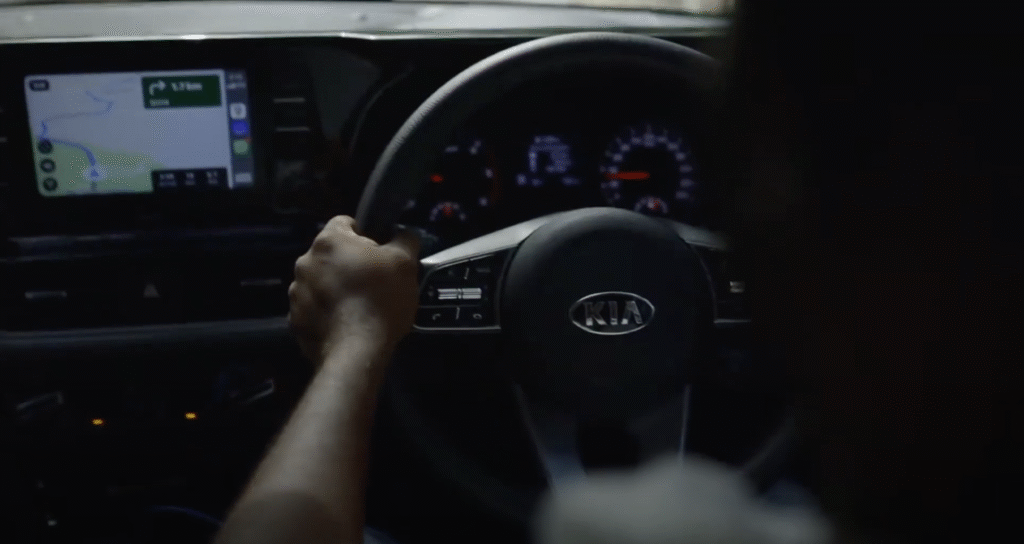
We produced three testimonial films. They featured KIA owners who had been through accidents and came out safe, telling the story of what happened in their own words. That gave the films a clear job: make KIA’s safety promise feel real, through people rather than specifications.
What we focused on
Authenticity over production gloss. Before we pressed record, we focused on who was speaking and why their story mattered. The goal wasn’t cinematic perfection. It was emotional truth.
Contextual storytelling. Each film went beyond a simple “I love my car” line. We captured:
- Why the customer chose Incheon KIA
- How the brand supported them
- What their ownership experience feels like
That layered context is what turns a few honest sentences into a persuasive story.
A comfortable visual style. We shot in places that felt natural to each customer, either at the Incheon KIA showroom or in settings connected to their experience. A relaxed setting helps people speak normally, and a story is much easier to believe when the person telling it isn’t stiff.
Human sound, not studio silence. We kept the ambient audio and natural speech patterns to preserve sincerity. Nothing feels more staged than an over-polished voice-over laid on top of a real person.
How the films are used
One well-made film can serve several teams:
- Website trust builders: embedded on the site, they tell visitors right away that this isn’t a faceless business. It’s a community of car owners.
- Sales enablement: the sales team can share a real customer story with a prospect who is weighing up a decision.
- Social reach: short, relatable stories travel further on social platforms than product claims do.
Credits: visual content producer Naseef Gafoor, DoP Rajesh Aravind, editor Shiyas Ahamed, content writing by Thayyiba Jinan. Produced by The Vertical Story. You can watch the films and see the full scope on the Incheon KIA project page.
How to Plan a Testimonial Video
Most of a testimonial video’s quality is decided before the shoot day. Here’s the planning sequence we follow.
Step 1: Decide the one thing the film must prove
“Customers love us” is too vague. “Our cars protect families”, “our homestay feels like home” and “our skincare is gentle enough for daily use” are specific. One clear proof point keeps the interview focused and the edit short.
Step 2: Choose the right customer
Your happiest customer isn’t always your best speaker. Look for someone whose story matches your ideal buyer’s situation, who can speak comfortably in the language your audience uses (Malayalam, Hindi, Tamil, English or a natural mix), and who is genuinely willing, not just obliging a request from the sales team.
Step 3: Do a pre-interview call
A 15-minute call a few days before the shoot is the most useful planning step. You hear the story once, spot the moments worth filming, and the customer meets a familiar voice on the day.
Step 4: Plan the location and the B-roll
Choose a location that adds context: their home, their shop, the showroom, the room they stayed in. Then list the supporting shots that will cover edits and show the story: hands on a steering wheel, the product in use, a walk through the space. Interviews alone get flat very quickly.
Step 5: Sort out consent early
Get a simple written release that covers where the video will be used (website, social, paid ads, outdoor) and for how long. Agree it before the shoot, not after the edit.
On the Shoot Day
- Keep the crew small. A director, a DoP and a sound or assist person is often enough. A big crew makes non-actors nervous.
- Prioritise audio. A lapel mic plus a backup recorder matters more than a second lens. Viewers forgive soft footage. They don’t forgive bad sound.
- Use two angles if you can. A wide and a tight frame make it easy to cut between answers without jump cuts.
- Warm up off-camera. Spend the first ten minutes chatting. The best lines usually come after people stop thinking about the camera.
- Ask for full sentences. Ask people to include the question in their answer (“I chose Incheon KIA because…”), so each clip makes sense on its own.
- Shoot vertical-safe. Frame with enough room for a 9:16 crop, so social cutdowns don’t need awkward reframing.
Questions to Ask in a Testimonial Interview
Avoid questions that can be answered with “yes”. Open questions bring out stories:
- What was going on in your life when you first started looking for this?
- What almost stopped you from going ahead?
- Why did you choose us over the other options?
- What was the first moment you felt you’d made the right decision?
- Can you walk me through what happened on the day it mattered most?
- What would you tell a friend who is in the same position you were in?
- What surprised you about the experience?
- If you had to describe us in one sentence, what would you say?
How Long Should a Testimonial Video Be?
Length depends on where the video lives and how much attention a viewer has at that stage. These are the working ranges we plan around:
- Instagram Reels and YouTube Shorts: 15–45 seconds, built around one strong line, with captions burned in.
- Paid social and retargeting ads: 15–30 seconds, with the proof point in the first three seconds.
- Website and landing pages: 60–120 seconds for a single-customer story.
- YouTube and sales presentations: 2–4 minutes for a full case-study film.
- WhatsApp sharing by sales teams: under a minute, vertical or square, so it plays well on a phone.
The efficient approach is to shoot once and edit several versions: one hero film plus two or three cutdowns from the same interview.
Common Testimonial Video Mistakes
- Scripting the customer. Memorised lines sound memorised. Give people prompts, not paragraphs.
- Too much praise, no story. “They’re amazing” proves nothing. The specific detail is what persuades.
- Ignoring sound. A beautiful frame with echo or traffic noise loses viewers in seconds.
- No B-roll. A talking head for two minutes feels long even when the story is good.
- Hiding it on one page. Plan its use across the website, social, ads and the sales team.
- Skipping consent. An unclear release can force you to pull a film just when it starts working.
What Does a Testimonial Video Cost in India?
Costs vary a lot because “a testimonial video” can mean a phone interview or a multi-location film. Published rate cards from Indian production houses in 2026 broadly put a single, simply produced testimonial at around ₹25,000 at the entry level, a professionally crewed single-location film from roughly ₹75,000 upwards, and multi-camera, multi-location productions at ₹1.5 lakh or more. Treat these as indicative only. The real number depends on:
- Number of customers and films: filming three stories in one schedule costs much less per film than three separate shoots.
- Locations and travel: each move adds setup time, and outstation shoots add travel and stay.
- Crew and equipment: a director-led team with a DoP, lighting and sound costs more than a single operator.
- Pre-production: research, pre-interviews and question design.
- Edit scope: the number of cutdowns, subtitles in multiple languages, graphics and colour grading.
- Usage: ads and outdoor use may need broader releases.
Planning testimonials as a series, as with Incheon KIA’s three films, is usually the most cost-effective route.
Frequently Asked Questions
What is a testimonial video?
A testimonial video is a short film in which a real customer describes their experience with a brand in their own words: what they needed, why they chose the brand and what happened afterwards. It works as social proof on websites, social media and in sales conversations.
How long should a testimonial video be?
For Reels and Shorts, aim for 15–45 seconds. For a website or landing page, 60–120 seconds works well. Full case-study films for YouTube or sales presentations can run 2–4 minutes. Shoot once and edit several lengths.
Should a testimonial video be scripted?
No. Plan the questions, not the answers. A director can steer the conversation and ask for an answer again, but the words should be the customer’s own. Scripted testimonials tend to sound like ads, and viewers notice.
How do I convince customers to appear in a testimonial video?
Ask customers who already speak warmly about you, explain exactly where the video will be used, keep the shoot short and comfortable, and share the final film with them. Many people are happy to help a brand they genuinely like when the process is respectful.
How many testimonial videos does a brand need?
Start with two or three that cover your main buyer types or proof points. That gives your website, social calendar and sales team enough variety.
Final Thought
The human brain is wired to trust other humans. A good testimonial gets past scepticism because it isn’t you making the claim. It’s someone who has nothing to sell. That was the thinking behind our films for Incheon KIA, and it applies whether you run a dealership, a resort or a D2C brand.
Real stories. Real voices. Real impact.
Planning testimonial films for your brand? Tell us who your customers are and where the videos need to work, and we’ll help you shape a series that feels honest and earns trust. Get in touch with The Vertical Story.
Related reading: The Importance of a Brand Film: Lessons from Our GITAM Project.
Written by: Naseef Gafoor, Director, The Vertical Story
Produced by: The Vertical Story, Creative Content Studio, Kochi