
Quick answer: The Vertical Story is a creative content studio in Kochi, India that plans and produces hotel, resort and homestay photography and films, project by project. The best hotel room photography ideas are simple: shoot one clean hero wide of every room, then the bed, the view from the window or balcony, the bathroom, the seating corner, a few character details and one human moment, in morning and evening light, in both horizontal and vertical frames. Shoot every room category the same way so a guest can compare them. Below is the full shot list we work from, with examples from our hotel, resort and homestay projects.
Why Room Photos Need a Shot List
The room is the one thing every guest is paying for, and it is usually the first gallery they open on your website, Google listing or booking platform. They are asking practical questions: How big is it? Where is the bed? What do I see when I open the curtains? What is the bathroom like? A good set of room photos answers those questions before anyone has to ask.
Most weak room galleries have the same problem: a few wide shots taken in whatever light was there, and nothing else. A shot list fixes that. It makes sure every room category gets the same core frames, and it leaves time for the details and moments that make your property feel like itself. If you have read our hotel photography tips for small hotels, this post is the practical follow-up: the room-by-room list.
The Hotel Room Shot List: 12 Shots Every Listing Needs
1. The hero wide
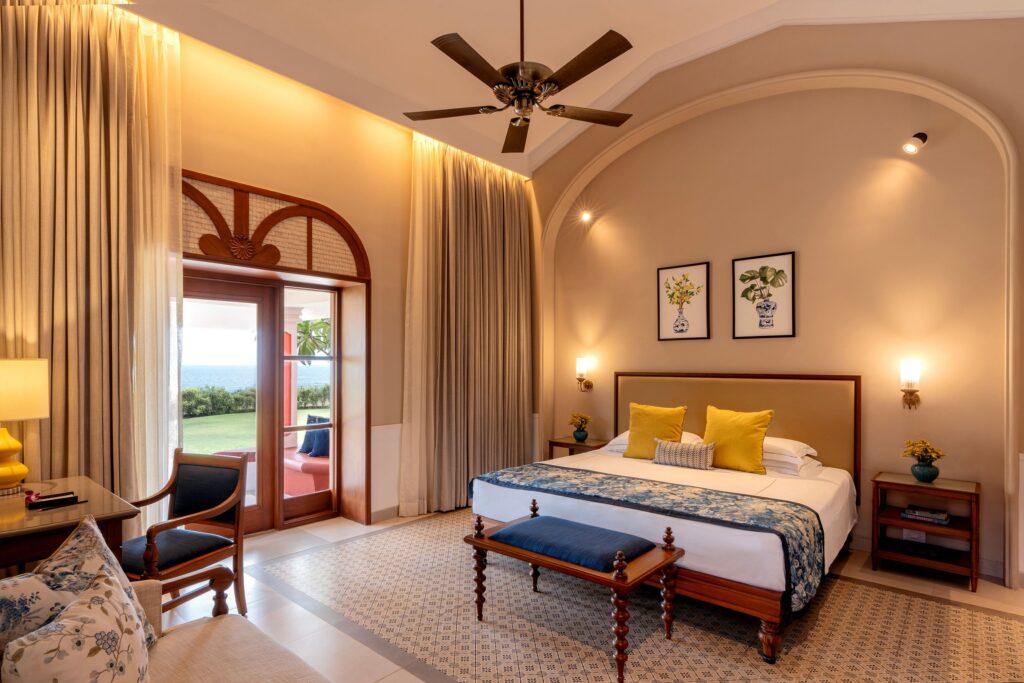
One wide frame that shows the whole room and how it is laid out. Shoot from a corner or the doorway at roughly chest height, keep vertical lines straight, and show the bed, the window and at least one other piece of furniture. This is the image that goes first in every gallery.
Takeaway: wide, not distorted. If the walls bend, step back or use a slightly longer lens. Guests notice when a room looks bigger in photos than in person.
2. The bed
A closer frame of the bed, made properly: pressed linen, cushions placed but not piled, the headboard visible. On our TAJ Bengal project, one bedroom frame is built around the tufted headboard and the large window, with nothing added to compete with them.
3. The room-to-view shot
If the room has a view, it needs its own frame, shot from inside so the guest sees what they would see. At TAJ Holiday Village, Goa, the hero room frame looks out over the balcony to the garden and the sea; at TAJ Chia Kutir, Darjeeling, a bedroom suite is framed with its balcony and the mountains beyond. Balance the exposure so the window is not a white blank and the room is not a dark cave. This often means waiting for softer light or blending exposures carefully.
4. The bathroom
Guests always look for it, so give it at least one clean frame: vanity, mirror, shower or tub, fresh towels. Watch the mirror, because it will show you and the camera if you are not careful.
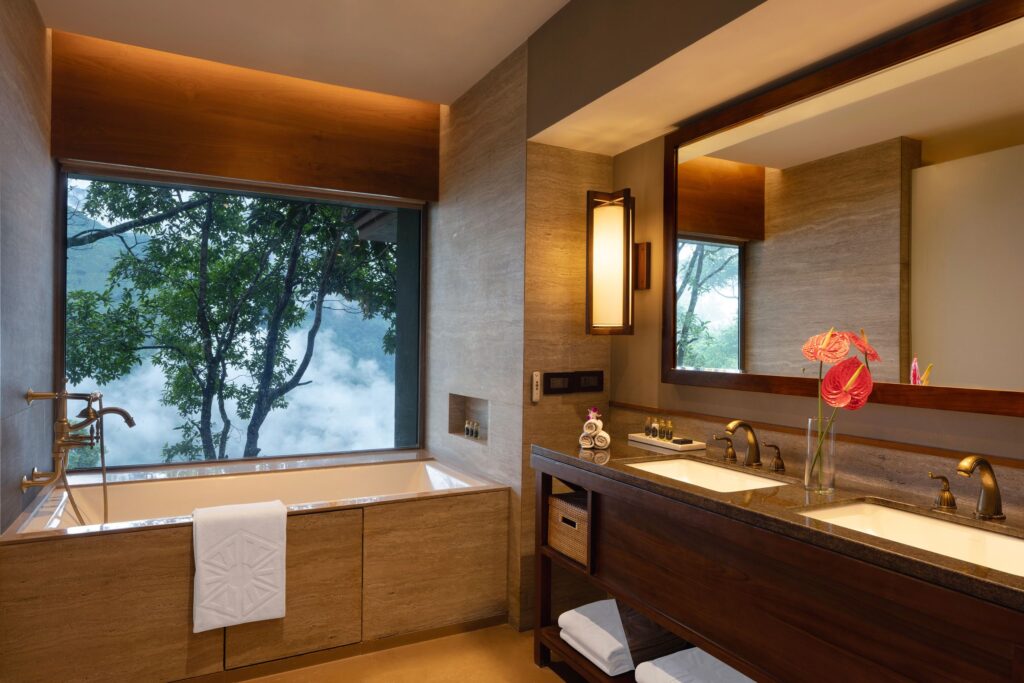
At TAJ Chia Kutir, the bathtub faces the forest, so the bathroom frame doubles as a view shot. If your bathroom has something like that, a window, an outdoor shower or a garden bath, lead with it.
5. The seating or work corner
A sofa by the window, a desk, a reading chair, a balcony with two chairs. This frame tells business travellers they can work and tells couples where they will have their morning tea.
6. Details that show character
Three to five tight frames that only your property has: carved woodwork, a local textile, handmade soap, a tea tray, a lamp. At Paradisa Plantation Resort, the rooms sit inside traditional Kerala wooden houses with antique columns and artefacts, and those details carry the story as much as the wide frames do. Pair every wide with a few details and the gallery feels considered rather than catalogued.
7. A human moment
One or two frames with a person in the room, kept natural: someone opening the curtains, reading by the window, a staff member turning down the bed. The TAJ Holiday Village set includes a frame of someone opening the curtains in a warmly lit room, and the TAJ Bengal set a staff member preparing the bed in front of the window.
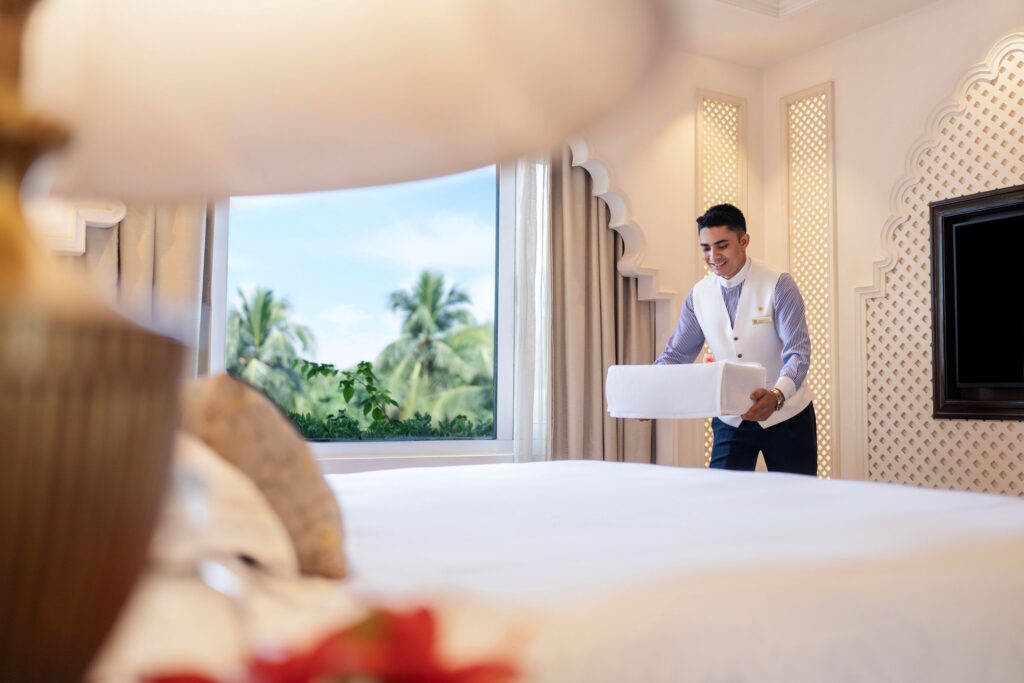
Takeaway: people make a room feel lived in, but they should never hide the room. Keep them small in the frame or at the edge.
8. Morning and evening versions
The same room feels different at 8 AM and 7 PM. Shoot the hero wide in soft morning light, then again in the evening with the lamps on. Morning sells freshness; evening sells comfort. On our multi-day TAJ Chia Kutir shoot, the schedule followed the light, from morning mist to golden hour, rather than forcing every space into one slot.
9. The approach
For cottages, villas and garden rooms, show how you get there: the path, the door, the veranda. At TAJ Holiday Village, the cottages sit in tropical gardens, and a frame of the cottage in its greenery says more than any description.
10. Every room category, shot the same way
If you sell a deluxe room, a suite and a villa, each one needs the same core set (hero wide, bed, view, bathroom, seating). Same height, same angles, same colour. That consistency lets a guest compare categories side by side on a booking page, and it stops a cheaper room looking better than the one you want to upsell.
11. Vertical frames
Instagram Stories, Reels and most phone screens are vertical. Frame a vertical version of the hero wide, the bed and the view while you are set up, rather than cropping a horizontal later and losing half the room.
12. A short clip
A few seconds of curtains opening, steam from a cup on the balcony or light moving across the bed. Our Paradisa micro films, such as Morning tea and Evening chill, run about sixteen seconds and are each built around one moment. One room clip like that can be a Reel, a website loop or the opening of an ad.
Homestay Photos: What Changes for Small Properties
A homestay does not compete on size or amenities. It competes on feeling, the hosts and the place around it. When we worked on Poothali Paddyview Homestay in the paddy fields of Kerala, the same shot list applied, with a few changes:

- Compact rooms. Some rooms were small, so we used wide-angle lenses carefully to keep proportions true. Never stretch a small room to look big; guests will notice on arrival.
- Shared spaces count as rooms. The verandah, the terrace and the dining table are part of the stay, so they deserve their own hero frames.
- Hosts in the story. Moments like tea being prepared or a conversation over food were captured as they happened, not staged.
- Context from above. A few aerial frames showed how the homestay sits in the fields, without letting the drone dominate the set.
- Order the gallery like a stay. Approach, rooms, experiences, then the quiet evening frames.
The same thinking works for villas. For Asset Gitanjali, a residential villa project in Kerala, the set paired wide architectural frames and aerials with interiors, so a viewer understood both the home and the place it sits in.
Hotel Room Shot List Template
Copy this into a sheet, add one block of rows per room category, and tick each shot off on the day. For the brief and moodboard that come before it, see our guide to planning a brand photoshoot.
| # | Shot | Framing and orientation | Light | Used for | Priority |
|---|---|---|---|---|---|
| 1 | Hero wide | Wide, horizontal + vertical | Morning, lamps off | Gallery cover, website, listings | Must-have |
| 2 | Bed | Mid, horizontal | Morning | Listings, website | Must-have |
| 3 | Room-to-view | Wide from inside, horizontal | Soft, balanced window | Listings, ads | Must-have |
| 4 | Bathroom | Wide + one detail | Even, lights on | Listings | Must-have |
| 5 | Seating or work corner | Mid, horizontal | Morning | Listings, website | Must-have |
| 6 | Character details (3 to 5) | Close, square or vertical | Any soft light | Social, website | Nice-to-have |
| 7 | Human moment | Mid, horizontal + vertical | Morning or evening | Social, ads | Nice-to-have |
| 8 | Evening hero | Wide, horizontal | Dusk, lamps on | Website, social | Must-have |
| 9 | Approach or exterior | Wide, horizontal | Golden hour | Website, listings | Must-have for cottages and villas |
| 10 | Short clip | Vertical, 5 to 15 seconds | Morning or evening | Reels, website loop | Nice-to-have |
The rows are an example layout; your priorities will depend on the property and where the images will be used.
How to Prepare a Room Before the Shoot
- Remove clutter: remotes, cables, chargers, rubbish bins, laminated notices and housekeeping carts.
- Press the linen and set cushions and throws the way housekeeping would for a VIP arrival.
- Clean glass, mirrors and taps; these show every fingerprint on camera.
- Switch on every lamp and check the bulbs match in colour, so one corner is not orange and another blue.
- Open or arrange curtains to frame the view.
- Add one or two local touches, such as a tea tray or a fruit bowl, and stop there. Guests should recognise the room they booked.
Common Room Photography Mistakes
- Over-wide lenses that bend walls and make a small room look like a hall.
- Fake skies, heavy HDR and over-saturation. They grab attention online and break trust at check-in.
- Mixed colour temperatures across a gallery, so rooms look like they belong to different hotels.
- Only horizontal frames, which leaves social and mobile with awkward crops.
- Shooting only the best room. Guests booking the standard room want to see the standard room.
Rooms Are Only Part of the Gallery
Room photos win the comparison, but dining, the spa, the lobby and the experiences around the property are what make people choose you. Our hotel food photography guide covers the dining side, and our TAJ hotel and resort case studies show how rooms, food and experiences come together in one production. Beyond the projects above, we have also worked with Samroha Resorts and Punnamada Lake Resort; you can browse the work in our hospitality portfolio.
A Note from Naseef
Naseef Gafoor, who directed the Paradisa Plantation Resort films and photographed Asset Gitanjali, shares more of his room, resort and hospitality photography on his own site. You can see it on his hotel and resort photographer page.
Frequently Asked Questions
How many photos does a hotel room listing need?
Enough to cover the core set for each room category: hero wide, bed, view, bathroom and seating, plus a few details. For reference, the full deliverables on our projects have ranged from twelve retouched photographs at Paradisa Plantation Resort to sixty photographs at TAJ Bengal, covering rooms, dining and experiences together.
Should hotel rooms be shot with natural or artificial light?
Start with natural light and plan the schedule around it: rooms in soft morning light, exteriors at golden hour. Where a room is dark, use soft, diffused light rather than direct flash so the room keeps its real mood.
What are good homestay photos?
Honest ones. Show the rooms as they are, give the verandah and shared spaces their own frames, include the hosts and the setting, and keep editing natural.
Can rooms, food and experiences be shot in one production?
Yes, and it is usually the better choice. Planning them together means one schedule built around the light and one consistent look across the website, listings and social.
Do you work on retainers?
No. The Vertical Story works project by project, with a scope agreed for each shoot.
Planning a Room Shoot for Your Property?
At The Vertical Story, we plan and produce photography and films for hotels, resorts and homestays, from the recce and shot list to the final edit. Tell us about your property and the room categories you need to cover, and we will help you plan the shoot.
Written by: Naseef Gafoor, Director, The Vertical Story
Produced by: The Vertical Story, Creative Content Studio, Kochi